
原型模式
创建型模式,这里并非标准的原型模式,主要讲原型和原型链,及对象属性描述符
特点
原型模式的核心在于通过克隆现有对象来创建新对象,避免重复初始化。
- 原型模式在实际开发中较少直接使用,但原型链是 JavaScript 的基础
- 属性描述符不常用,但它是理解对象属性的重要基础
标准原型模式
代码
ts
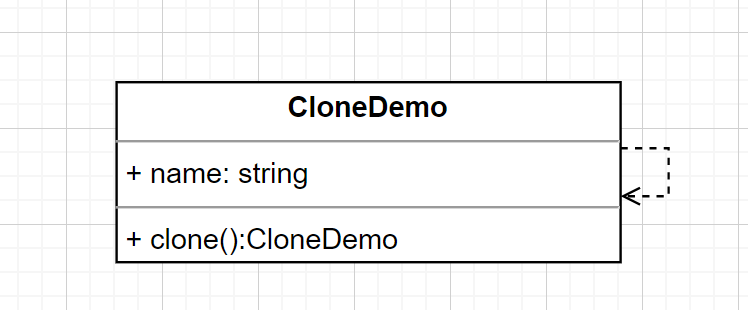
class CloneDemo {
  name = 'clone demo';
  clone(): CloneDemo {
    return new CloneDemo();
  }
}
使用 UML 图表示
原型 & 原型链
原型链是 JavaScript 实现继承的基础机制,通过原型链可以实现属性和方法的共享。
原型
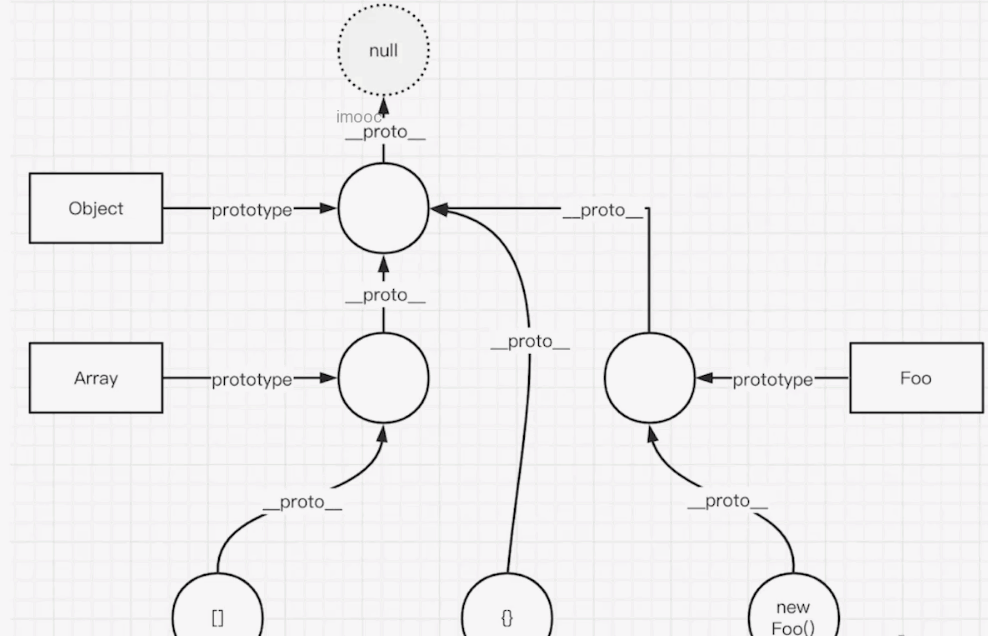
- 函数(class)都有显示原型 prototype
- 对象都有隐式原型
__proto__(也可以写出[[Prototype]]) - 对象
__proto__(也可以写出[[Prototype]]) 指向构造函数的 prototype
ts
const obj = {};
console.log(obj.__proto__ === Object.prototype); // true

const arr = [];
console.log(arr.__proto__ === Array.prototype); // true

function Person() {}
const person = new Person(); // Person 是构造函数
console.log(person.__proto__ === Person.prototype); // true
原型链
- 对象
Object.prototype.__proto__指向 null
ts
console.log(Object.prototype.__proto__); // null继承
使用场景
- 用 Object.create() 修改对象的
__proto__的指向
ts
const obj1 = {};
console.log(obj1.__proto__); // [Object: null prototype] {}

const obj2 = Object.create({});
console.log(obj2.__proto__); // {}

const obj3 = Object.create(null);
console.log(obj3.__proto__); // undefined
对象属性描述符
属性描述符是控制对象属性行为的关键,通过它可以精确控制属性的可读性、可写性和可枚举性。
获取和设置
- 获取 Object.getOwnPropertyDescriptor
- 设置 Object.defineProperty
ts
const obj = { x: 100 };
// 获取属性描述符
console.log(Object.getOwnPropertyDescriptor(obj, 'x')); // { value: 100, writable: true, enumerable: true, configurable: true }
// 修改属性描述符
Object.defineProperty(obj, 'x', {
  writable: false,
  enumerable: false,
});

console.log(Object.getOwnPropertyDescriptor(obj, 'x')); // { value: 100, writable: false, enumerable: false, configurable: true }
有哪些属性描述符
- value
- 定义属性值
- 没有 value 时,则看不到对象属性
- 但可以通过 get set 来操作属性值
ts
const obj = { x: 100 };

let y = 200;
Object.defineProperty(obj, 'y', {
  get() {
    return y;
  },
  set(value) {
    y = value;
  },
});
console.log(obj.y); // 200
obj.y = 300;
console.log(obj.y); // 300
console.log(Object.getOwnPropertyDescriptor(obj, 'y')); // { get: [Function: get], set: [Function: set], enumerable: false, configurable: true }- configurable
- 是否可以 delete 删除,并重新定义
- 是否可以修改其他属性描述
- 是否可以修改 get set
ts
const obj = { x: 100 };

Object.defineProperty(obj, 'y', {
  value: 200,
  configurable: false,
});
console.log(Object.getOwnPropertyDescriptor(obj, 'y')); // { value: 200, configurable: false, writable: false, enumerable: false }
console.log(delete obj.y); // false
console.log((obj.y = 100)); // 报错- writable
- 属性值是否可以被修改
- 对比 Object.freeze() 冻结:现有属性不可被修改,新属性不可被添加;使用 Object.isFrozen()
- 对比 Object.seal() 密封:现有属性可以被修改,新属性不可被添加;使用 Object.isSealed()
ts
const obj = Object.freeze({ x: 100 });
obj.x = 200; // 报错了
obj.y = 200; // 报错了
console.log(Object.getOwnPropertyDescriptor(obj, 'x')); // { value: 100, writable: false, enumerable: true, configurable: false }

const obj = Object.seal({ x: 100 });
obj.x = 200; //
obj.y = 200; // 报错了
console.log(Object.getOwnPropertyDescriptor(obj, 'x')); // { value: 200, writable: true, enumerable: true, configurable: false }- enumerable
- 是否可以 for...in 遍历:现在已经不需要 Object.hasOwnProperty() 来判断了
- 对比 for...of 迭代器
js
const obj = {
  x: 10,
  y: 20,
  z: 30,
};
Object.defineProperty(obj, 'x', {
  enumerable: false,
});
// 打印出 y z
for (const key in obj) {
  console.log(key);
}
遍历 Symbol 属性
- 使用 Object.getOwnPropertySymbols() 获取
- 使用 Reflect.ownKeys() 获取
ts
const obj = {
  x: 10,
  [Symbol('y')]: 20,
};

console.log(Object.keys(obj)); // [ 'x' ]
console.log(Object.getOwnPropertySymbols(obj)); // [ Symbol(y) ]
console.log(Reflect.ownKeys(obj)); // [ 'x', Symbol(y) ]